Kidney stones can cause intense pain, and when a stone does not pass on its own, the next question is how to remove it safely. For many patients, the answer is RIRS, a modern laser procedure done without any cut on the body.
If you are looking for RIRS surgery in Pune, this guide explains what RIRS is, who needs it, how it is done, what recovery looks like and what decides the RIRS cost in Pune. It is medically reviewed by Dr. Kalpesh Saswade, a urologist in Dhanori, Pune, who has performed more than 500 RIRS procedures and consults at Vandana Uro Care.
What Is RIRS Laser Kidney Stone Surgery?
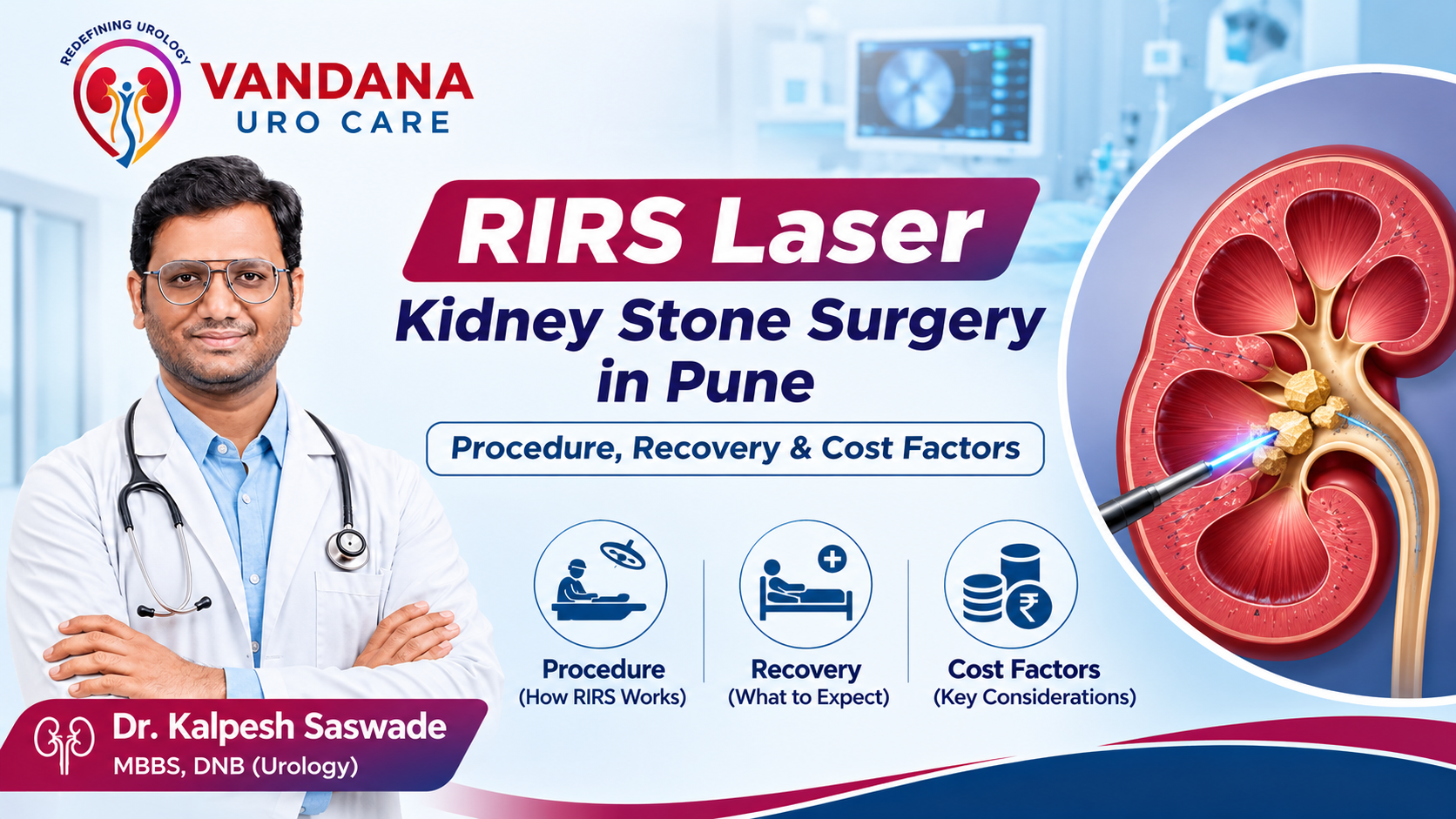
RIRS stands for Retrograde Intrarenal Surgery. A thin, flexible telescope (ureteroscope) is passed through the natural urinary passage, from the urethra and bladder up the ureter into the kidney, so there is no incision and no stitches.
A laser fibre passed through the scope breaks the stone into tiny fragments or fine dust. Larger pieces are removed with a small basket, and the dust passes out with the urine. RIRS is commonly done as a day-care or short-stay procedure.
When Is RIRS Recommended?
Small stones may pass with fluids, pain medicines and monitoring. Dr. Kalpesh Saswade may suggest RIRS laser kidney stone surgery when:
- The kidney stone is too large to pass on its own, generally up to about 2 cm
- It causes repeated pain, blood in the urine or infections
- It is blocking urine flow and may harm the kidney
- Shock wave treatment (ESWL) has failed or is unlikely to work, or you take blood thinners that cannot be stopped easily
The decision depends on the stone’s size, number, location and hardness and on your overall health, so a proper evaluation always comes first.
RIRS vs Other Kidney Stone Treatments
No single treatment suits every stone:
- Medicines and observation: for small stones likely to pass by themselves.
- ESWL: shock waves from outside break the stone; it may need repeated sessions and does not suit every stone.
- URSL: the same scope-and-laser approach, used mainly for stones in the ureter.
- PCNL: a small keyhole cut into the kidney, usually for large or complex stones above about 2 cm.
- RIRS: no cut; suited to small and medium kidney stones, including hard ones. Very large stones may need a second sitting.
Before the Surgery: Tests and Preparation
Good preparation makes surgery safer. You will usually need:
- Urine culture: any infection must be treated first, because operating with infected urine raises the risk of serious infection.
- Blood tests for kidney function, blood counts and clotting.
- Imaging: an ultrasound and usually a CT scan to map the size, position and density of the stone.
- Medicine review: tell the doctor about blood thinners, diabetes or blood pressure medicines, and never stop any on your own.
In some patients, for example with infection or a narrow ureter, a thin tube called a stent is placed first and RIRS is done a few weeks later. You will also be told when to stop eating and drinking before surgery, and it helps to bring a family member along.
How RIRS Is Done: Step by Step
- Anaesthesia: usually general anaesthesia, so you feel no pain.
- Reaching the stone: the flexible scope is passed gently through the natural urinary passage into the kidney.
- Laser fragmentation: the laser breaks the stone into small pieces or dust, and larger pieces are removed with a tiny basket.
- Stent: a soft, thin tube (DJ stent) is often left in the ureter for some days to help healing. It is not needed in every case.
The procedure often takes around an hour, and most patients go home the same day or the next day.
Recovery After RIRS
Most patients recover quickly, but it helps to know what is normal.
- First few days: mild burning while passing urine, blood-tinged urine, urgency and a dull side ache are common, especially with a stent, and usually settle with medicines.
- Return to work: many people resume desk work within a few days; avoid heavy lifting until the doctor allows it.
- Stent removal: usually after one to a few weeks in a short procedure. Please do not skip it, because a stent left too long can cause problems.
- Follow-up: a check-up and scan confirm the kidney is clear. Drink plenty of water as advised.
Contact your doctor or go to the nearest emergency department urgently if you have fever with chills, severe pain, heavy bleeding or clots, repeated vomiting, or you cannot pass urine.
Possible Risks of RIRS
RIRS is safe and effective, but no surgery is completely risk-free. Possible problems include:
- Stent discomfort or urgency
- Urinary infection, fever or bleeding
- Small fragments left behind that may need another sitting
- Rarely, injury or later narrowing of the ureter
Testing the urine beforehand, careful patient selection and following aftercare advice reduce these risks.
RIRS Cost in Pune: What Decides the Final Bill
There is no single price for RIRS, because the RIRS cost in Pune differs from patient to patient. The main factors are:
- The stone: size, number, hardness and position decide the time needed and whether a second sitting is required.
- Stent: whether one is placed, and the procedure later to remove it.
- Anaesthesia and hospital stay: length of stay and room category.
- Tests: blood tests, urine culture, CT scan and follow-up imaging.
- Equipment and disposables: items such as the laser fibre and scope accessories used during surgery.
- Insurance: many health policies may cover medically necessary stone surgery; check waiting periods, cashless facility and room-rent limits.
Before you decide, ask for an itemised estimate showing what is included and what may be charged extra, such as stent removal or a repeat scan.
How to Prevent Kidney Stones From Coming Back
Kidney stones tend to recur, so these habits matter:
- Drink enough water so that you pass roughly 2 to 2.5 litres of urine daily, unless your doctor restricts fluids.
- Reduce salt and packaged foods.
- Keep animal protein in moderation.
- Do not cut calcium from food on your own; take supplements only if advised.
- Lemon water may help some patients, but check with your doctor first.
- After repeated stones, ask about stone analysis and tests for the cause.
Consult Dr. Kalpesh Saswade at Vandana Uro Care, Dhanori
Dr. Kalpesh Saswade is a consultant urologist and andrologist with MBBS and DNB (Urology) qualifications and more than 17 years of clinical experience, including over 500 RIRS procedures and more than 1,500 kidney stone surgeries. At Vandana Uro Care, he reviews your reports and explains whether RIRS or another option suits your stone before any decision is made.
Vandana Uro Care – Dr. Kalpesh Saswade
Shop No 201, Goodwill Square Mall Rd, Madhav Nagar, Dhanori, Pune, Maharashtra 411015
Phone: +91 9766818096
Patients from Dhanori, Vishrantwadi, Lohegaon, Yerwada, Viman Nagar and nearby areas can consult this urologist in Dhanori, Pune for kidney stone treatment.
Frequently Asked Questions
Is RIRS surgery in Pune painful?
RIRS surgery in Pune is done under anaesthesia, so you feel no pain during the procedure. Mild burning and stent discomfort are common for a few days and are controlled with medicines.
How long does RIRS take, and do I need to stay in the hospital?
RIRS laser kidney stone surgery often takes around an hour. Most patients go home the same day or after one night, depending on their health and the stone.
How soon can I go back to work after RIRS?
Many patients return to desk work within a few days. Heavy work and exercise should wait until Dr. Kalpesh Saswade allows them.
Is RIRS suitable for large kidney stones?
RIRS works well for stones up to about 2 cm. Larger or complex stones may need PCNL or a staged RIRS, which Dr. Kalpesh Saswade decides after reviewing your scans.
Will the kidney stone come back after RIRS?
Stones can form again, especially if you drink too little water. Good hydration, a balanced diet and regular follow-up with your urologist in Dhanori, Pune lower the chances.
How much does RIRS cost in Pune?
The RIRS cost in Pune depends on the stone, the stent, the hospital stay, tests and insurance cover. For an estimate for your case and kidney stone treatment in Pune, call Vandana Uro Care on +91 9766818096.
Where can I consult a urologist in Dhanori, Pune for RIRS?
You can consult Dr. Kalpesh Saswade at Vandana Uro Care, Shop No 201, Goodwill Square Mall Rd, Madhav Nagar, Dhanori, Pune, Maharashtra 411015.
Book Your Consultation
If you have been advised RIRS surgery in Pune or suffer from repeated stone pain, do not wait for infection or kidney damage. Call Vandana Uro Care on +91 9766818096 to book a consultation with Dr. Kalpesh Saswade and carry your scans and reports.
This article is for general information only and is not a substitute for medical advice, diagnosis or treatment. Please consult a qualified doctor for your specific condition.