

Male infertility can be a sensitive subject for many couples who are planning to start a family. Male Infertility Treatment in Pune focuses on identifying the reasons behind fertility problems and finding suitable treatment options. At Vandana Uro Care, Dhanori, Pune, patients can explore urological care with Dr. Kalpesh Saswade and learn about the importance of proper evaluation, timely diagnosis and individualised medical guidance for male reproductive health.
Male infertility does not always mean that natural conception is impossible. Several factors, including low sperm count, hormonal changes, sperm movement problems and certain medical conditions, can affect a man’s fertility. Understanding these factors can help couples take informed steps towards pregnancy.
What Is Male Infertility?
Male infertility refers to a man’s reduced ability to contribute to a pregnancy. It may occur when the body does not produce enough healthy sperm or when sperm cannot move or function properly. Problems with sperm transport, ejaculation and sexual function can also affect the chances of conception.
A fertility evaluation is generally recommended when a couple has not conceived after 12 months of regular, unprotected intercourse. Earlier medical advice may be appropriate when either partner has known fertility concerns or relevant medical conditions.
Men searching for Male Infertility Treatment in Pune should understand that infertility is a medical concern, not a personal failure. A proper evaluation can help identify possible causes and determine whether medical treatment, surgery or assisted reproductive techniques may be useful.
What Are the Common Causes of Male Infertility?
Male infertility can develop because of several medical, hormonal, structural and lifestyle-related factors. Identifying the underlying cause is important because treatment depends on the specific problem.
1. Low Sperm Count
Low sperm count means that the semen contains fewer sperm than expected. This condition may reduce the chance of sperm reaching and fertilising an egg.
Possible causes include hormonal disorders, testicular conditions, previous infections, genetic factors and certain medications. A semen analysis is usually one of the first tests recommended to assess sperm concentration and other semen characteristics.
2. Poor Sperm Motility
Sperm motility refers to the ability of sperm to move effectively. Healthy movement helps sperm travel towards the egg, while reduced motility may make natural conception more difficult.
Doctors evaluate sperm movement through semen analysis. The results are considered alongside sperm count, morphology, medical history and other relevant findings.
3. Abnormal Sperm Morphology
Sperm morphology describes the size and shape of sperm. Changes in the head, middle section or tail may affect sperm function.
An abnormal morphology result does not automatically mean that pregnancy cannot occur. A doctor interprets the result together with other fertility findings before recommending further investigations or treatment.
4. Hormonal Imbalances
Hormones play an important role in sperm production. Changes in testosterone, follicle-stimulating hormone or other reproductive hormones may affect testicular function.
When hormonal problems are suspected, blood tests may be recommended. Treatment depends on the underlying condition, and men planning a pregnancy should avoid taking testosterone or hormonal medicines without medical advice.
5. Varicocele
A varicocele is an enlargement of veins around the testicle. In some men, it may be associated with reduced sperm quality or fertility problems.
Not every varicocele requires treatment. A specialist considers the physical examination, fertility history and test results before deciding whether monitoring or a procedure may be appropriate.
6. Blockages in the Reproductive Tract
In some cases, sperm production may occur normally, but a blockage prevents sperm from travelling through the reproductive tract. Previous infections, surgery, injury or congenital conditions can contribute to such problems.
Further evaluation helps identify whether an obstruction is present and whether a corrective procedure or assisted reproductive technique may be suitable.
7. Lifestyle and Medical Factors
Smoking, excessive alcohol consumption, anabolic steroids and certain recreational drugs may affect reproductive health. Obesity, some chronic illnesses and exposure to specific environmental hazards may also contribute to fertility problems.
Healthy lifestyle changes can support overall wellbeing, but they may not resolve every cause of infertility. Persistent fertility concerns should be assessed by a qualified healthcare professional.
Why Is Early Diagnosis Important in Male Infertility?
Early diagnosis helps identify possible causes of fertility problems and allows couples to understand their available options. It can also help detect medical conditions that may need treatment for reasons beyond fertility.
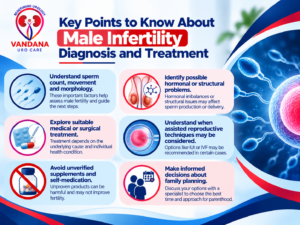
A timely evaluation may help patients:
- Understand sperm count, movement and morphology.
- Identify possible hormonal or structural problems.
- Explore suitable medical or surgical treatment.
- Understand when assisted reproductive techniques may be considered.
- Avoid unverified supplements and self-medication.
- Make informed decisions about family planning.
Men should not assume that fertility is normal simply because they do not experience pain or other symptoms. Some conditions affecting sperm production may remain unnoticed until a couple experiences difficulty conceiving.
Male Infertility Diagnosis in Pune: Tests and Evaluation
Male Infertility Diagnosis in Pune usually begins with a detailed discussion of medical history, previous illnesses, medications, reproductive health and the duration of attempts to conceive.
Dr. Kalpesh Saswade can be approached at Vandana Uro Care to enquire about urological consultation and the evaluation of relevant reproductive health concerns. Patients should confirm the availability of specific fertility investigations and treatments directly with the clinic.
Medical History and Physical Examination
The doctor may ask about previous surgeries, testicular injuries, infections, sexual health concerns, medication use and lifestyle habits. A physical examination may help identify conditions such as a varicocele or other abnormalities involving the reproductive system. Sharing accurate medical information helps the healthcare professional decide which investigations may be necessary.
Semen Analysis
Semen analysis is one of the main initial investigations used in male fertility assessment. It examines several characteristics, including:
- Semen volume.
- Sperm concentration and total sperm number.
- Sperm motility.
- Sperm morphology.
An abnormal result may require repeat testing, depending on the circumstances. A single semen analysis does not always provide a complete picture of reproductive health.
Hormone Testing
Blood tests may be recommended when symptoms or initial findings suggest a hormonal problem. Depending on the individual case, tests may include testosterone, follicle-stimulating hormone and other relevant hormones. Hormone testing is not necessary for every patient. The doctor selects investigations according to the medical history and examination findings.
Ultrasound and Other Investigations
Ultrasound may be considered when a physical examination or medical history suggests a structural problem. Genetic testing may also be appropriate in selected cases, particularly when sperm counts are extremely low or sperm are absent from the semen. Not every patient needs all these investigations. Testing should be based on individual medical needs.
Treatment Approaches for Male Infertility
Male Infertility Treatment in Pune depends on the underlying cause, the severity of the problem, the man’s general health and the fertility assessment of both partners. There is no single treatment that works for every patient.
1. Medical Treatment
Some fertility problems are related to treatable medical conditions. When an infection or specific hormonal disorder is identified, appropriate treatment may help address the underlying problem.
Medicines should only be taken under medical supervision. Treatment that helps one condition may be ineffective or unsuitable for another.
2. Hormonal Treatment
Certain hormonal disorders can interfere with sperm production. In selected cases, specialist-prescribed hormonal treatment may help improve reproductive function.
External testosterone should not be used casually by men planning to conceive because it can suppress the body’s natural sperm production. Anyone taking testosterone who wishes to have children should discuss this with their healthcare professional.
3. Surgical Treatment
Surgery may be considered when a correctable structural problem contributes to infertility. Examples include selected cases of clinically significant varicocele or obstruction of the reproductive tract.
The suitability of surgery depends on examination findings, test results and the couple’s fertility goals. Potential benefits, risks, recovery time and alternatives should be discussed before making a decision.
4. Treatment for Sexual and Ejaculation Problems
Erectile dysfunction and ejaculation difficulties may interfere with conception. These conditions can have physical, hormonal, medication-related or psychological causes.
Male Sexual Health Treatment in Pune may involve identifying the cause of these concerns and choosing appropriate treatment. Addressing a sexual health problem may improve the possibility of conception when it is a contributing factor.
5. Assisted Reproductive Techniques
When natural conception is difficult or other treatments are unsuitable, assisted reproductive techniques may be discussed with a fertility specialist.
Common options include:
- Intrauterine insemination (IUI): Prepared sperm are placed inside the uterus.
- In vitro fertilisation (IVF): Eggs and sperm are combined in a laboratory.
- Intracytoplasmic sperm injection (ICSI): A single sperm is injected directly into an egg as part of IVF.
- Surgical sperm retrieval: Sperm may be collected through a procedure in selected cases when sperm are absent from the ejaculate.
The appropriate option depends on the cause of infertility, sperm availability, the female partner’s fertility assessment and the couple’s preferences.
Lifestyle Changes That May Support Male Fertility
Healthy habits can support reproductive health, although lifestyle changes alone cannot correct every cause of infertility.
Maintain a Healthy Weight
Excess body weight may be associated with hormonal changes and reproductive health concerns. Balanced meals and regular physical activity can support general health.
Avoid Smoking and Recreational Drugs
Smoking and some recreational substances may negatively affect sperm health. Men planning a pregnancy should discuss substance use with their doctor and seek support to stop when necessary.
Limit Alcohol Consumption
Excessive alcohol consumption may affect overall health and reproductive function. Reducing alcohol intake is a sensible step when preparing for pregnancy.
Avoid Unverified Supplements
Products marketed for improving sperm count do not all have strong scientific evidence supporting their use. Some supplements may interact with medications, while anabolic steroids can reduce sperm production.
Medical advice should be sought before starting supplements or changing prescribed medication.
Manage Stress and Sleep Well
Fertility difficulties can affect emotional wellbeing. Adequate sleep, regular exercise, supportive conversations and counselling when needed may help couples manage the experience.
Stress should not automatically be considered the cause of infertility. Medical factors still require proper assessment.
How to Choose a Urologist in Pune for Male Infertility
Choosing an appropriate doctor is an important part of fertility care. People searching for a Urologist in Pune should consider qualifications, relevant experience, communication and the availability of appropriate investigations or referrals.
When selecting a doctor, consider the following:
- Qualifications: Verify the doctor’s medical qualifications and professional registration.
- Relevant experience: Ask about experience evaluating male reproductive health and fertility-related conditions.
- Clear communication: Choose a professional who explains test results and treatment choices in simple language.
- Individualised care: Recommendations should reflect the patient’s diagnosis and medical needs.
- Referral options: Some patients may require an andrologist, endocrinologist or fertility specialist.
- Follow-up arrangements: Consider appointment availability and access to further evaluation.
A Male Infertility Specialist in Pune may help assess conditions involving sperm production, reproductive anatomy or sexual health. Complex cases may require coordinated care with a fertility centre.
What to Expect From a Consultation
During a consultation, the doctor may review symptoms, previous test results, medical history and family-planning goals. Depending on the findings, further testing or specialist referral may be recommended.
Before the appointment, prepare a list of medicines, previous reports and relevant medical history. Asking questions about the diagnosis, treatment alternatives and expected follow-up can help you understand the process.
Male Infertility Consultation in Dhanori Pune
People living in Dhanori and nearby areas may prefer a conveniently located clinic for consultations and follow-up appointments. Those searching for a Male Infertility Doctor in Dhanori Pune or a Male Infertility Consultation in Dhanori Pune should confirm that the clinic can evaluate their specific fertility concern.
Vandana Uro Care is located in Dhanori, Pune. Patients can contact the clinic to enquire about appointments with Dr. Kalpesh Saswade and confirm which urological services and investigations are available.
A Male Infertility Doctor Near Me search can help identify nearby healthcare providers. However, location should not be the only deciding factor. Qualifications, relevant experience, the services offered and referral arrangements are also important.
When Should You Seek Professional Help?
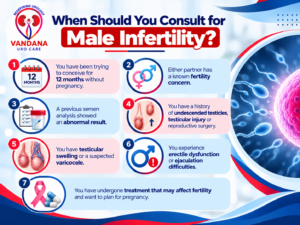
Consider seeking medical advice if:
- You have been trying to conceive for 12 months without pregnancy.
- Either partner has a known fertility concern.
- A previous semen analysis showed an abnormal result.
- You have a history of undescended testicles, testicular injury or reproductive surgery.
- You have testicular swelling or a suspected varicocele.
- You experience erectile dysfunction or ejaculation difficulties.
- You have undergone treatment that may affect fertility and want to plan for pregnancy.
Earlier assessment may be appropriate depending on age, medical history and other risk factors. You do not need to wait for obvious symptoms before seeking advice.
Frequently Asked Questions – Male Infertility Treatment in Pune
1. What is Male Infertility Treatment in Pune?
Male Infertility Treatment in Pune involves identifying and managing conditions that affect male fertility. Depending on the cause, treatment may include medication, surgery, lifestyle changes or assisted reproductive techniques based on the patient’s medical evaluation.
2. When should I consult a Male Infertility Specialist in Pune?
You should consult a Male Infertility Specialist in Pune if pregnancy has not occurred after 12 months of regular, unprotected intercourse or earlier if either partner has known fertility concerns. An abnormal semen analysis may also require further medical evaluation.
3. What tests are included in Male Infertility Diagnosis in Pune?
Male Infertility Diagnosis in Pune usually begins with a medical history review and semen analysis. Depending on the findings, a doctor may recommend hormone tests, a physical examination, ultrasound or genetic testing to identify possible causes of infertility.
4. How can I find a Male Infertility Doctor in Dhanori Pune?
To find a Male Infertility Doctor in Dhanori Pune, check the doctor’s qualifications, relevant experience and available services. You can contact Vandana Uro Care to enquire about an appointment with Dr. Kalpesh Saswade and confirm whether the clinic can evaluate your fertility concerns.
5. Can a Urologist in Pune help with male infertility?
Yes, a Urologist in Pune can evaluate several conditions affecting male fertility, including reproductive tract blockages, varicocele and certain sexual health problems. Depending on the diagnosis, referral to an andrologist or fertility specialist may also be recommended.
6. Is Male Infertility Treatment in Pune possible for low sperm count?
Yes, Male Infertility Treatment in Pune may help address certain causes of low sperm count. Treatment depends on the underlying condition and may involve medical management, selected surgical procedures or assisted reproductive techniques when appropriate.
7. What happens during a Male Infertility Consultation in Dhanori Pune?
During a Male Infertility Consultation in Dhanori Pune, the doctor may review your medical history, previous test reports, medications and fertility concerns. Based on the findings, further investigations or referral to a fertility specialist may be recommended.
8. How can I find a Male Infertility Doctor Near Me for fertility testing?
Searching for a Male Infertility Doctor Near Me can help you identify nearby healthcare providers. Before booking an appointment, check the doctor’s qualifications and confirm whether the clinic offers fertility consultations, relevant investigations or referrals.
9. What does Male Sexual Health Treatment in Pune involve?
Male Sexual Health Treatment in Pune may involve evaluating erectile dysfunction, ejaculation difficulties, reduced sexual desire or hormonal concerns that affect reproductive health. Treatment depends on the underlying cause and may help address problems that interfere with conception.
10. Does Male Infertility Treatment in Pune always require surgery?
No, Male Infertility Treatment in Pune does not always require surgery. Depending on the cause, treatment may involve medication, lifestyle changes or assisted reproductive techniques. Surgery may be considered when a correctable structural problem contributes to infertility.
11. Can lifestyle changes support Male Infertility Treatment in Pune?
Yes, healthy habits can support Male Infertility Treatment in Pune by promoting general and reproductive health. Avoiding smoking, limiting alcohol, maintaining a healthy weight and avoiding anabolic steroids may be helpful, although lifestyle changes cannot resolve every cause of infertility.
12. Can male infertility occur without symptoms, and when should I seek treatment in Pune?
Yes, male infertility can occur without noticeable symptoms. If you are experiencing difficulty conceiving, seeking Male Infertility Treatment in Pune can help identify possible causes through medical evaluation and appropriate fertility testing.
Conclusion: Take an Informed Step Towards Better Reproductive Health
Male infertility can be challenging, but understanding its causes and available treatments can help couples make informed decisions. Early evaluation may identify treatable conditions and clarify the next steps towards pregnancy.
Male Infertility Treatment in Pune should always be based on an appropriate medical assessment and an individual treatment plan. Whether the concern involves low sperm count, poor sperm movement, hormonal changes or sexual health, professional guidance can help determine the most suitable approach.
If you are looking for urological care in Dhanori, Pune, contact Vandana Uro Care to enquire about an appointment with Dr. Kalpesh Saswade and confirm the services available for your concern.