Kidney Stone Treatment in Pune
Kidney Stone Treatment in Pune
Kidney stones are one of the most common urological problems affecting people of all ages. They can cause severe pain and discomfort and may also lead to serious complications if not treated on time. Many people ignore the early symptoms, hoping the pain will go away on its own. However, delaying treatment can increase the size of the stone and make treatment more difficult.
If you are looking for expert Kidney Stone Treatment in Pune, Dr. Kalpesh Saswade at Vandana Urocare offers advanced diagnosis and personalized treatment for all types of kidney stones. With more than 17 years of clinical experience, Dr. Kalpesh Saswade has successfully treated thousands of patients using modern and minimally invasive techniques.
At Vandana Urocare, we believe every patient deserves the right diagnosis and the best possible treatment. Our clinic is equipped with advanced technology to provide safe, effective, and faster recovery for patients suffering from kidney stones. Whether you have a small stone that can be managed with medicines or a larger stone requiring Laser Kidney Stone Treatment in Pune or RIRS Surgery in Pune, we provide complete care under one roof.
Patients from Dhanori, Lohegaon, Viman Nagar, Vishrantwadi, Yerawada, Kharadi, Wagholi, Hadapsar, Tingre Nagar, Kalyani Nagar, and nearby areas trust Dr. Kalpesh Saswade for reliable and compassionate kidney stone treatment.
What Are Kidney Stones?
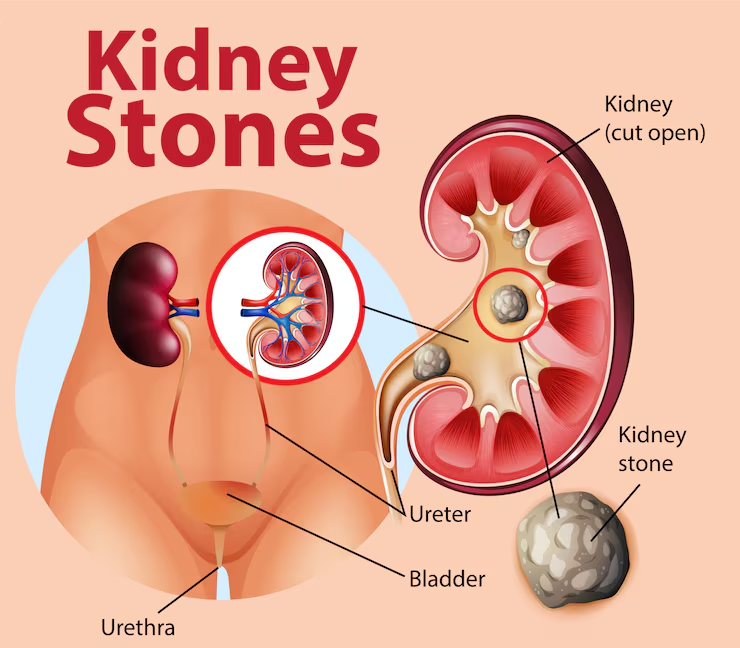
Kidney stones are hard deposits made of minerals and salts that form inside the kidneys. They develop when certain substances in the urine, such as calcium, oxalate, or uric acid, become highly concentrated and stick together. Over time, these crystals grow into stones of different sizes.
A kidney stone can remain inside the kidney or move into the ureter, the tube connecting the kidney to the bladder. When this happens, it may block the flow of urine and cause severe pain.
The size of a kidney stone can vary. Some stones are as small as a grain of sand, while others may become as large as a golf ball. Small stones often pass naturally through urine, but larger stones usually require medical treatment.
Choosing Kidney Stone Treatment in Pune at the right time can prevent complications such as urinary infections, kidney damage, and severe pain.
At Vandana Urocare, Dr. Kalpesh Saswade performs a detailed evaluation to identify the size, location, and type of stone before recommending the most suitable treatment.
Types of Kidney Stones
Different kidney stones require different treatment approaches. Understanding the type of stone helps in selecting the best treatment and preventing future stone formation.
Calcium Stones
Calcium stones are the most common type of kidney stones. They usually form because of high levels of calcium or oxalate in the urine. Poor hydration, excessive salt intake, and certain dietary habits can increase the risk.
Uric Acid Stones
These stones develop when the urine becomes too acidic. People who eat large amounts of animal protein or have gout are at a higher risk of developing uric acid stones.
Struvite Stones
Struvite stones usually develop after repeated urinary tract infections. They can grow quickly and become quite large if not treated early.
Cystine Stones
Cystine stones are rare and are usually caused by an inherited genetic disorder known as cystinuria. Patients with this condition may develop kidney stones repeatedly throughout their lives.
Why Knowing the Stone Type Matters
Every kidney stone is different. Identifying the type of stone helps Dr. Kalpesh Saswade recommend the most effective treatment and provide guidance to reduce the chances of future stone formation.
At Vandana Urocare, we offer advanced investigations and modern treatment options, including Laser Kidney Stone Treatment in Pune and RIRS Surgery in Pune, to ensure safe treatment with faster recovery.
Our patient-first approach, modern technology, and personalized care have made Dr. Kalpesh Saswade a trusted Kidney Stone Specialist in Pune. If you are experiencing kidney stone symptoms or have been diagnosed with a stone, early consultation can help prevent complications and protect your kidney health.
Common Causes of Male Reproductive Problems
Many factors can affect male reproductive health, including:
- Hormonal imbalance
- Diabetes
- High blood pressure
- Obesity
- Smoking
- Alcohol consumption
- Poor diet
- Lack of exercise
- Stress and anxiety
- Previous infections
- Genetic conditions
- Increasing age
Understanding these causes helps us provide effective Andrology Treatment in Pune based on the patient’s individual health condition.
Risk Factors for Kidney Stones
Although kidney stones can affect anyone, some people are more likely to develop them.
You may have a higher risk if you:
- Drink very little water
- Eat a high-salt diet
- Consume excessive animal protein
- Have obesity
- Have diabetes
- Have a family history of kidney stones
- Frequently suffer from urinary tract infections
- Have a history of previous kidney stones
- Lead a sedentary lifestyle
- Have certain metabolic disorders
Understanding these risk factors can help prevent future stone formation.
What Causes Kidney Stones?
Kidney stones form when minerals and salts in the urine become concentrated and stick together. Several lifestyle and medical factors can increase the risk of stone formation.
Some common causes include:
Not Drinking Enough Water
Dehydration is one of the leading causes of kidney stones. When you drink less water, your urine becomes concentrated, making it easier for minerals to form stones.
High Salt Intake
Eating foods that contain excessive salt increases calcium levels in the urine, which can contribute to stone formation.
Diet High in Oxalates
Foods such as spinach, chocolate, nuts, and tea contain oxalates. In some people, consuming these foods in large amounts may increase the risk of calcium oxalate stones.
High Animal Protein Intake
Eating excessive amounts of red meat, poultry, and seafood can increase uric acid levels and raise the risk of kidney stones.
Obesity
Being overweight can change the chemical balance of urine, increasing the chances of developing kidney stones.
Family History
People with a family history of kidney stones are more likely to develop them.
Certain Medical Conditions
Conditions such as gout, hyperparathyroidism, recurrent urinary tract infections, inflammatory bowel disease, and kidney disorders can increase the risk of kidney stones.
Certain Medications
Some medicines and calcium supplements may contribute to kidney stone formation if taken without proper medical supervision.
At Vandana Urocare, Dr. Kalpesh Saswade carefully identifies the underlying cause before recommending the most suitable Kidney Stone Treatment in Pune.
Diagnosis of Kidney Stones
At Vandana Urocare, Dr. Kalpesh Saswade believes that accurate diagnosis is the first step toward successful treatment. Before recommending any procedure, he carefully evaluates the patient’s condition to identify the size, location, and type of kidney stone.
The diagnostic process may include:
Medical History and Physical Examination
Dr. Kalpesh Saswade discusses your symptoms, previous medical history, dietary habits, and family history of kidney stones. A physical examination also helps assess your condition.
Urine Test
A urine test helps detect blood, infection, crystals, or other abnormalities that may indicate kidney stones or urinary tract problems.
Blood Tests
Blood tests check kidney function and measure calcium, uric acid, and other minerals that may contribute to stone formation.
Ultrasound
Ultrasound is a safe and painless imaging test that helps identify kidney stones and detect blockage in the urinary tract.
CT Scan
A CT scan provides detailed images of the kidneys, ureters, and bladder. It is one of the most accurate methods for diagnosing kidney stones.
X-ray (KUB)
In some cases, an X-ray may be recommended to locate certain types of kidney stones and monitor treatment progress.
After reviewing all reports, Dr. Kalpesh Saswade creates a personalized Kidney Stone Treatment in Pune plan based on your condition.
Kidney Stone Treatment Options
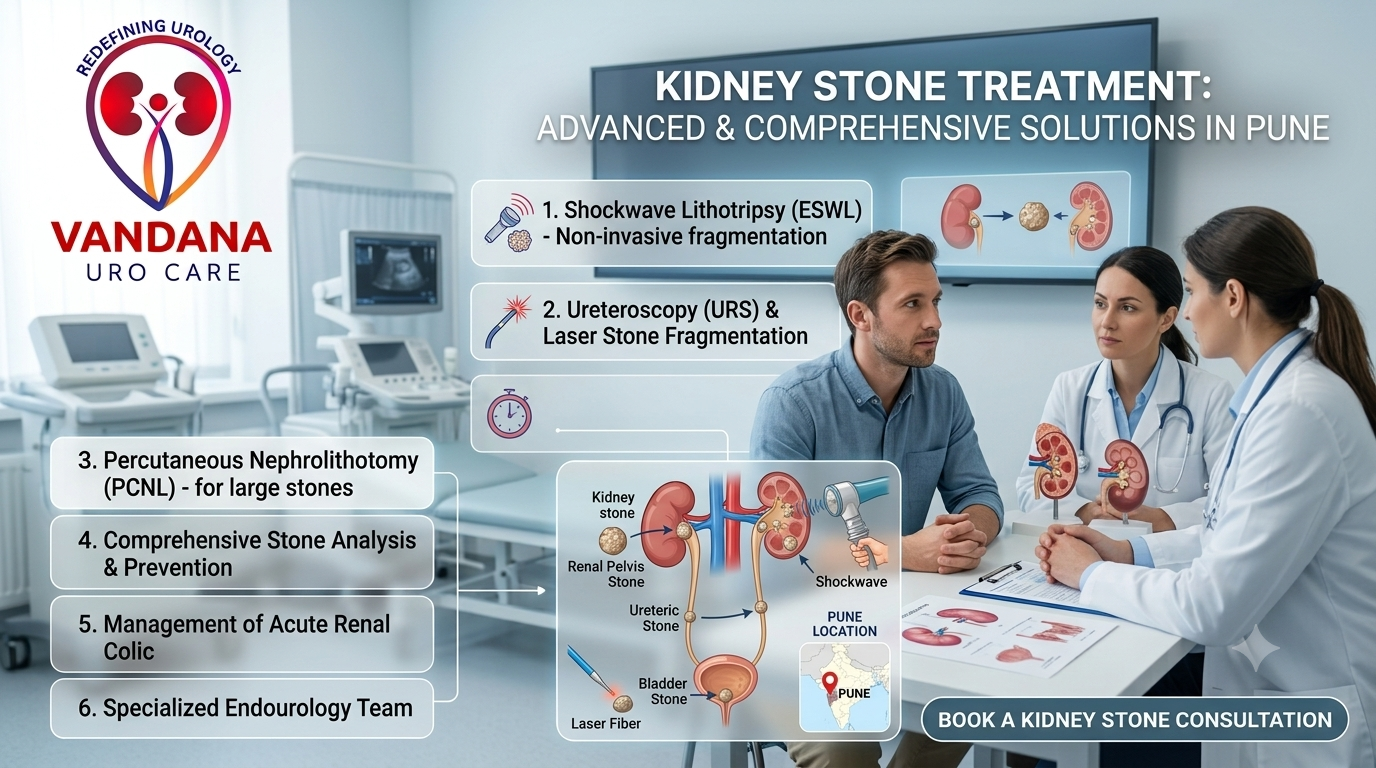
Treatment depends on the size, location, and type of kidney stone. At Vandana Urocare, we provide advanced Kidney Stone Treatment in Pune using modern technology and evidence-based techniques.
Medicines
Small kidney stones often pass naturally with proper hydration and medication. Medicines may help:
- Relieve pain
- Relax the urinary tract
- Reduce infection
- Help stones pass more easily
Patients are also advised to drink plenty of water and follow dietary recommendations.
Laser Kidney Stone Treatment
For medium and large stones, Laser Kidney Stone Treatment in Pune is one of the safest and most effective options.
Using advanced laser technology, the stone is broken into tiny fragments that are removed naturally or with specialized instruments.
Benefits of Laser Kidney Stone Treatment
- No large surgical cuts
- Less pain
- Minimal bleeding
- Faster recovery
- Short hospital stay
- High success rate
- Lower risk of complications
Dr. Kalpesh Saswade has extensive experience performing laser kidney stone procedures with excellent patient outcomes.
- FAq
Frequently Asked Questions

Kidney stone symptoms can vary depending on the size and location of the stone. Small stones may not cause any symptoms until they begin to move through the urinary tract. Common signs include severe pain in the back, side, lower abdomen, or groin, pain or burning while urinating, blood in the urine, frequent urge to urinate, cloudy or foul-smelling urine, nausea, vomiting, and fever with chills if an infection is present. If you experience any of these symptoms, consult Dr. Kalpesh Saswade at Vandana Urocare for timely Kidney Stone Treatment in Pune.
You should visit a urologist as soon as you experience severe or persistent pain, blood in the urine, difficulty passing urine, fever, chills, repeated vomiting, or symptoms of a urinary tract infection. Delaying treatment can lead to complications such as urinary blockage, kidney infection, or kidney damage. Dr. Kalpesh Saswade recommends early diagnosis and treatment to prevent complications and ensure faster recovery.
Dr. Kalpesh Saswade at Vandana Urocare is a highly experienced urologist with over 17 years of clinical experience in treating kidney stones and other urological conditions. He provides personalized Kidney Stone Treatment in Pune using advanced diagnostic techniques and minimally invasive procedures, including laser kidney stone treatment, RIRS, URSL, and PCNL. Patients trust him for his accurate diagnosis, ethical medical advice, and patient-focused approach.
Yes. Laser Kidney Stone Treatment in Pune is one of the safest and most effective methods for removing kidney stones. During the procedure, a laser is used to break the stone into tiny fragments that can be removed or passed naturally through urine. The treatment is minimally invasive, involves minimal bleeding, causes less pain, reduces the risk of complications, and allows most patients to recover quickly and return to their normal activities within a short time.
RIRS (Retrograde Intrarenal Surgery) is an advanced minimally invasive procedure used to treat kidney stones without making any cuts or incisions. A flexible scope is passed through the natural urinary passage to reach the kidney, and a laser is used to break the stone into small pieces. RIRS is especially effective for stones located inside the kidney and offers benefits such as less pain, faster recovery, shorter hospital stays, and minimal risk of complications.
Yes, kidney stones can return if preventive measures are not followed. People who have had kidney stones once are at a higher risk of developing them again. Drinking plenty of water, eating a balanced diet, reducing salt intake, maintaining a healthy weight, and following your doctor's advice can significantly reduce the risk of recurrence. Dr. Kalpesh Saswade also recommends regular follow-up visits and lifestyle modifications to help prevent future kidney stones and maintain long-term kidney health.