

Kidney stones are one of the common problems treated by urologists. They develop when certain minerals and salts in urine become highly concentrated and form hard crystals inside the urinary system. Some stones remain in the kidney without causing noticeable symptoms, while others move into the ureter and may cause severe pain, urinary obstruction or other complications.
People searching for Kidney Stone Treatment in Pune often want to know why kidney stones develop, how they can be recognized and whether every stone requires surgery. The answer depends on several factors, including the stone’s size, location, number, symptoms, degree of obstruction and the patient’s overall health. A proper diagnosis helps determine whether the stone can be monitored or whether a procedure is required.
For patients in Dhanori, Madhav Nagar and surrounding areas, choosing an accessible urology specialist can also make diagnosis and follow-up more convenient. Dr. Kalpesh Saswade, a urologist associated with Vandana Uro Care, provides urological care in Madhav Nagar, Dhanori, Pune. His provided profile lists MBBS and DNB (Urology) qualifications and experience in kidney stone management and minimally invasive urological procedures.
What Are Kidney Stones?
Kidney stones are solid deposits that form when substances present in urine become concentrated and crystallize. They can vary in size, shape and composition. Some are as small as grains, while others can become considerably larger.
The most common stones are calcium-based, although uric acid, struvite and other types can also occur.
A stone may remain inside the kidney without producing symptoms. However, when it moves into the ureter, it can interfere with urine flow and cause significant pain.
Understanding the type and location of a stone is an important part of planning Kidney Stone Treatment in Pune.
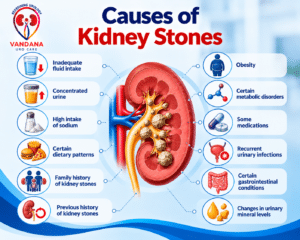
What Causes Kidney Stones?
Kidney stones can develop due to several factors. In some people, more than one risk factor may contribute to stone formation.
Common causes and risk factors include:
- Inadequate fluid intake
- Concentrated urine
- High intake of sodium
- Certain dietary patterns
- Family history of kidney stones
- Previous history of kidney stones
- Obesity
- Certain metabolic disorders
- Some medications
- Recurrent urinary infections
- Certain gastrointestinal conditions
- Changes in urinary mineral levels
Dehydration is particularly important because insufficient fluid intake can make urine more concentrated, increasing the likelihood of crystal formation.
However, drinking more water alone may not address every cause of recurrent stones. Patients who repeatedly develop stones may need a more detailed evaluation.
Common Symptoms of Kidney Stones
Kidney stone symptoms depend on the size and location of the stone and whether it is obstructing urine flow.
Common symptoms include:
- Sharp pain in the side or back
- Pain that spreads toward the lower abdomen or groin
- Pain that comes and goes in waves
- Blood in the urine
- Burning while urinating
- Frequent urge to urinate
- Nausea
- Vomiting
- Difficulty passing urine
- Cloudy or unusual-smelling urine
- Fever or chills when infection is present
The pain caused by a kidney stone is often called renal colic. It may become intense when a stone moves through the ureter.
If these symptoms occur repeatedly, evaluation by a Kidney Stone Specialist in Pune can help determine whether a stone is responsible and whether treatment is required.
Can Kidney Stones Cause Severe Pain?
Yes. Kidney stone pain can become severe, particularly when a stone moves from the kidney into the ureter.
The pain may begin around the side or back and can extend toward the abdomen, groin or genital region. It may fluctuate in intensity as the ureter contracts around the stone.
However, pain intensity alone does not determine the size of a stone. Even relatively small stones can cause significant pain when they obstruct the ureter.
When Is Kidney Stone Pain an Emergency?
Urgent evaluation is particularly important when kidney stone symptoms occur with:
- Fever
- Chills
- Severe or worsening pain
- Persistent vomiting
- Inability to pass urine
- Significant blood in urine
- Severe weakness
- Symptoms of infection
An obstructed urinary system associated with infection can become serious and may require urgent treatment.
Patients should not wait for a stone to pass naturally when there are signs of infection or significant urinary obstruction.
How Are Kidney Stones Diagnosed?
Accurate diagnosis is the first step in determining appropriate Kidney Stone Treatment in Pune.
A urologist generally reviews the patient’s symptoms, previous history, medications, fluid intake and other medical conditions.
Depending on the situation, investigations may include:
Urine Tests
Urine testing can identify blood, infection and other abnormalities that may provide clues about the cause of symptoms.
Blood Tests
Blood investigations may help evaluate kidney function and certain metabolic factors associated with stone formation.
Ultrasound
Ultrasound can identify many kidney stones and may also show urinary obstruction or swelling of the kidney.
CT Scan
A non-contrast CT scan can provide detailed information about the size, number and location of stones and may be recommended when clinically appropriate.
Stone Analysis
If a stone is passed or removed, laboratory analysis can determine its composition. This information may help guide prevention strategies for future stones.
Can Kidney Stones Pass Naturally?
Some small kidney stones can pass through the urinary tract without surgery. However, whether observation is appropriate depends on several factors.
A urologist may consider:
- Stone size
- Stone location
- Degree of obstruction
- Duration of symptoms
- Presence of infection
- Kidney function
- Patient’s overall health
- Previous history of stones
When spontaneous passage is reasonably likely and there are no concerning complications, a doctor may recommend observation, appropriate medication and follow-up.
However, not every stone should be left untreated. Persistent obstruction, infection, worsening pain or impaired kidney function may require active treatment.
Medical Treatment for Kidney Stones
Some patients may be managed without a procedure. Depending on the clinical situation, medical management can include:
- Adequate fluid intake as advised
- Pain-relieving medication
- Medicines that may facilitate passage in selected cases
- Treatment of urinary infection when present
- Follow-up imaging
Medication should be used according to medical advice, particularly in patients with kidney disease, other chronic conditions or ongoing medicines.
The goal is to manage symptoms safely while determining whether the stone is likely to pass or requires a procedure.
When Is Kidney Stone Surgery Required?
Kidney Stone Surgery in Pune may be considered when a stone is unlikely to pass naturally or when it causes complications.
Active treatment may be recommended when:
- The stone is large
- The stone causes persistent obstruction
- Pain continues despite medical treatment
- The stone does not pass
- There is recurrent infection
- Kidney function is affected
- The stone is associated with significant urinary obstruction
- The stone’s location makes spontaneous passage unlikely
The exact procedure depends on the individual stone and the patient’s clinical condition.
Extracorporeal Shock Wave Lithotripsy
Extracorporeal shock wave lithotripsy, commonly known as ESWL or SWL, uses externally generated shock waves to break a suitable kidney stone into smaller fragments.
The fragments can then pass through the urinary tract.
ESWL may be considered for selected stones based on:
- Stone size
- Stone location
- Stone composition
- Urinary anatomy
- Patient factors
Although ESWL can be useful for selected patients, it is not appropriate for every kidney stone.
Ureteroscopy and Laser Stone Treatment
Ureteroscopy is a minimally invasive procedure in which a small endoscope is passed through the urinary tract to reach a stone.
A laser may then be used to fragment the stone into smaller pieces. Depending on the circumstances, the fragments can be removed using specialized instruments.
Laser Kidney Stone Treatment in Pune may be considered for selected kidney and ureteric stones.
The decision depends on the stone’s location, size, anatomy and other clinical factors.
What Is RIRS?
RIRS stands for Retrograde Intrarenal Surgery. It is a minimally invasive endoscopic procedure used for selected kidney stones.
During RIRS, a flexible ureteroscope is introduced through the natural urinary passage and advanced into the kidney. The stone can then be fragmented using an appropriate laser.
RIRS may be considered for certain kidney stones based on their size, location and the patient’s anatomy.
RIRS Treatment in Pune should always be planned after appropriate imaging and urological assessment.
The doctor information provided for Dr. Kalpesh Saswade Urologist mentions experience with RIRS procedures. Patients should discuss whether RIRS is appropriate for their particular stone rather than choosing a procedure based only on its minimally invasive nature.
When Is PCNL Used?
Percutaneous nephrolithotomy, commonly called PCNL, is a procedure generally used for selected larger or complex kidney stones.
During PCNL, a small access tract is created through the skin into the kidney. Specialized instruments are then used to fragment and remove the stone.
PCNL may be considered for:
- Larger kidney stones
- Complex stone burden
- Certain staghorn stones
- Stones that are unlikely to be adequately treated through other approaches
The procedure and recovery depend on the patient’s individual circumstances.
How Does a Urologist Choose the Treatment?
There is no single treatment that is appropriate for every kidney stone.
A urologist evaluates several factors before recommending treatment:
- Stone size
- Stone location
- Number of stones
- Degree of obstruction
- Presence of infection
- Kidney function
- Patient’s age and health
- Previous stone procedures
- Urinary anatomy
- Available treatment options
This is why a consultation with a Kidney Stone Specialist Dr. Kalpesh Saswade may involve reviewing imaging reports before recommending a specific procedure.
Kidney Stone Prevention
Removing a kidney stone treats the current problem, but prevention is also important, particularly for patients who have experienced stones more than once.
Preventive recommendations may involve:
Maintain Adequate Hydration
Drinking sufficient fluids can help dilute urine. The appropriate amount varies depending on the patient’s health and individual circumstances.
Manage Sodium Intake
High sodium intake can influence urinary calcium levels. A doctor or dietitian may recommend appropriate dietary changes.
Maintain a Balanced Diet
Dietary recommendations may depend on the type of stone. Some patients may need to modify their intake of particular foods or nutrients.
Maintain a Healthy Weight
Obesity and metabolic factors can be associated with an increased risk of kidney stones.
Identify the Stone Type
When possible, analyzing a removed or passed stone can help identify its composition and guide future preventive measures.
Consider Metabolic Evaluation
Patients with recurrent stones may benefit from additional testing to identify factors that increase their risk of stone formation.
Can Diet Prevent Kidney Stones?
Diet can play an important role in preventing recurrence, but recommendations should be individualized.
Depending on the stone type and medical history, a specialist may discuss:
- Water intake
- Sodium intake
- Dietary calcium
- Animal protein
- Oxalate-containing foods
- Weight management
- Other nutritional factors
Patients should not unnecessarily eliminate calcium or other nutrients without medical advice because the appropriate diet depends on the type of stone and individual risk factors.

Kidney Stones and Urinary Infection
A kidney stone can sometimes coexist with a urinary infection. When a stone blocks urine flow and infection develops behind the obstruction, the condition can become serious.
Symptoms such as fever, chills, severe pain and difficulty passing urine require prompt evaluation.
In such situations, treating the infection and relieving urinary obstruction may take priority before definitive stone removal.
Can Kidney Stones Damage the Kidneys?
A kidney stone does not automatically cause permanent kidney damage. However, prolonged obstruction, particularly when combined with infection, can affect kidney function.
This is why persistent symptoms should not be ignored.
Appropriate imaging and follow-up can help determine whether a stone is causing obstruction and whether intervention is necessary.
Kidney Stone Treatment in Dhanori and Madhav Nagar
Patients searching for Kidney Stone Treatment in Dhanori Pune may consider a specialist who provides diagnosis, treatment and follow-up for urinary stone conditions.
Vandana Uro Care is associated with Dr. Kalpesh Saswade and is located in Madhav Nagar, Dhanori, Pune. The clinic’s services include urological care and kidney stone treatment.
For patients looking for Kidney Stone Treatment in Madhav Nagar Pune, the clinic’s location may provide convenient access for consultation and follow-up.
Patients should still choose treatment based on their diagnosis, stone characteristics and medical needs rather than location alone.
Kidney Stone Specialist Near Dhanori
People searching for a Kidney Stone Specialist near Dhanori Pune may compare specialists based on qualifications, relevant procedural experience, diagnostic approach and accessibility.
A specialist experienced in stone management can evaluate whether a patient requires observation, medication, ESWL, ureteroscopy, RIRS, PCNL or another treatment approach.
The right treatment depends on the individual stone rather than simply on the patient’s symptoms.
About Dr. Kalpesh Saswade
Dr. Kalpesh Saswade is a urologist associated with Vandana Uro Care in Madhav Nagar, Dhanori, Pune.
According to the provided doctor profile, he has MBBS and DNB (Urology) qualifications, more than 15 years of overall clinical experience and more than 5 years of specialized urology experience.
The profile provided for Dr. Kalpesh Saswade Kidney Stone Specialist highlights experience in kidney stone procedures, RIRS, laparoscopy and other urological treatments.
The listed experience includes:
- Kidney stone surgeries
- RIRS procedures
- Laparoscopic procedures
- Cancer surgeries
- Urological care
- Andrology-related services
The profile also displays figures for 1,500+ kidney stone surgeries, 500+ RIRS procedures, 200+ laparoscopy and cancer surgeries and 15,000+ patients treated.
These figures are based on the doctor information provided and should be considered alongside the patient’s specific diagnosis and treatment requirements.
When Should You See a Urologist?
You should consider a urological evaluation if you experience symptoms that may indicate kidney stones, particularly when they are severe, recurrent or persistent.
A consultation may be appropriate for:
- Recurrent side or back pain
- Blood in urine
- Burning during urination
- Repeated urinary infections
- Difficulty passing urine
- Persistent urinary urgency
- Recurrent kidney stones
- Nausea or vomiting associated with urinary pain
- Previously diagnosed stones that have not passed
Urgent medical assessment is particularly important when symptoms are accompanied by fever, chills, inability to pass urine or severe worsening pain.
Frequently Asked Questions Kidney Stone Treatment in Pune
What is the most effective treatment for kidney stones?
The most appropriate treatment depends on the stone’s size, location, number and associated symptoms. Depending on the case, treatment may include observation, medicines, ESWL, ureteroscopy, RIRS or PCNL.
Can kidney stones pass without surgery?
Yes, some smaller stones can pass naturally. However, a urologist should assess whether observation is appropriate based on stone size, location, obstruction and other factors.
Is RIRS a treatment for kidney stones?
Yes. RIRS is a minimally invasive endoscopic procedure used for selected kidney stones. Its suitability depends on the patient’s imaging and clinical condition.
How can I prevent kidney stones from returning?
Adequate hydration, appropriate dietary changes, management of relevant health conditions and evaluation of stone composition can help reduce the risk of recurrence in many patients.
Who treats kidney stones?
A urologist evaluates and treats kidney stones. Patients can choose a Urologist for Kidney Stones in Pune based on qualifications, relevant experience and the treatment options available for their condition.
Where can I find kidney stone care in Dhanori?
Patients seeking Kidney Stone Treatment in Pune around Dhanori and Madhav Nagar can consider local urology services such as Vandana Uro Care and discuss their condition with a qualified urologist.
Conclusion Kidney Stone Treatment in Pune
Kidney stones can range from small stones that pass naturally to larger or obstructing stones that require active treatment. Understanding the causes, symptoms and available treatment options can help patients seek appropriate medical care at the right time.
Kidney Stone Treatment in Pune may include observation, medication, ESWL, ureteroscopy, RIRS or PCNL depending on the individual case. Stone size, location, obstruction, infection, kidney function and overall health all influence treatment selection.
For patients in Dhanori, Madhav Nagar and surrounding areas, Dr. Kalpesh Saswade at Vandana Uro Care is a local urology option for evaluation and management of kidney stone conditions. Patients should undergo proper diagnostic assessment before deciding which treatment is appropriate.